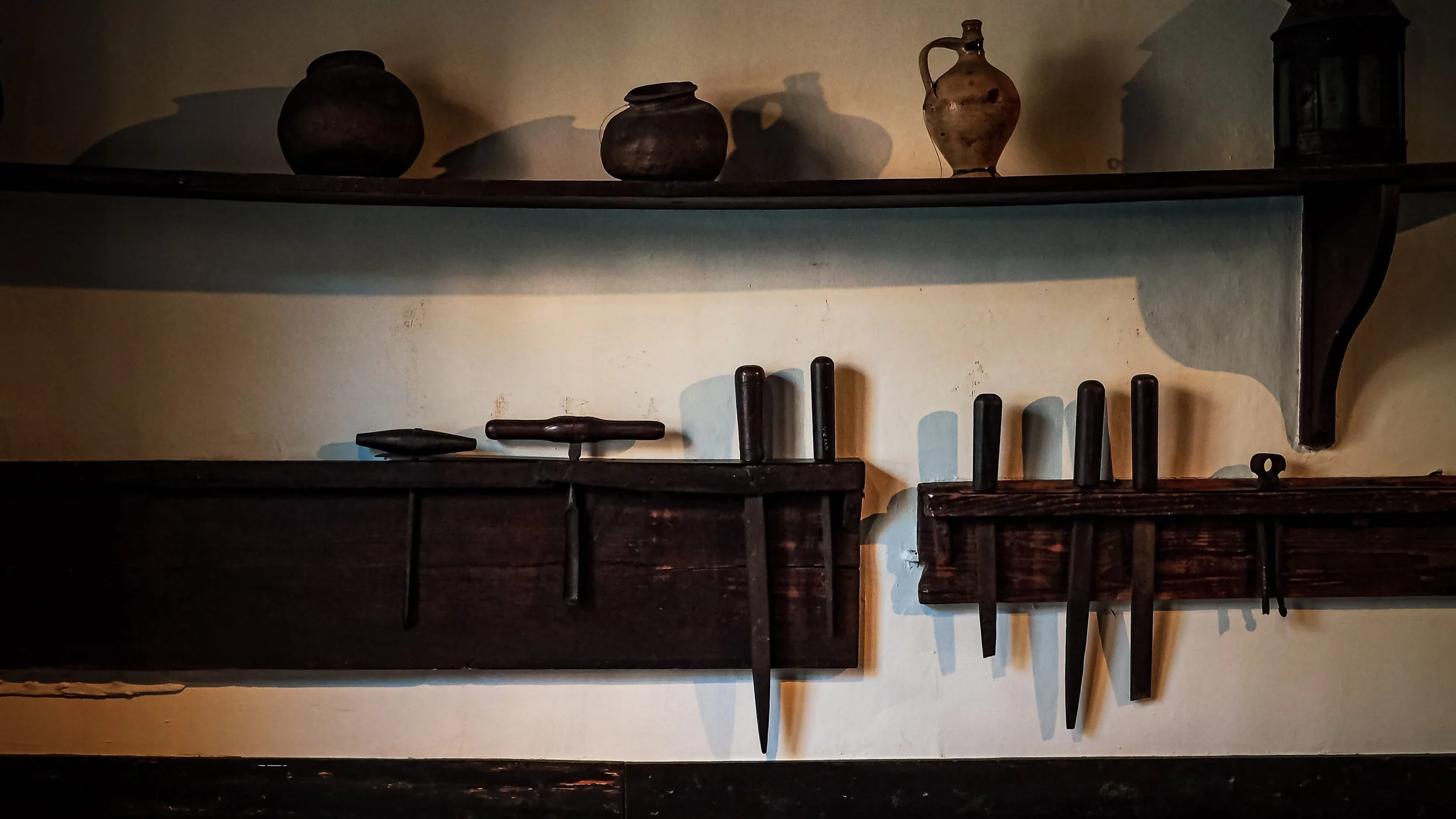
Plantin-Moretus: Foundry workshop
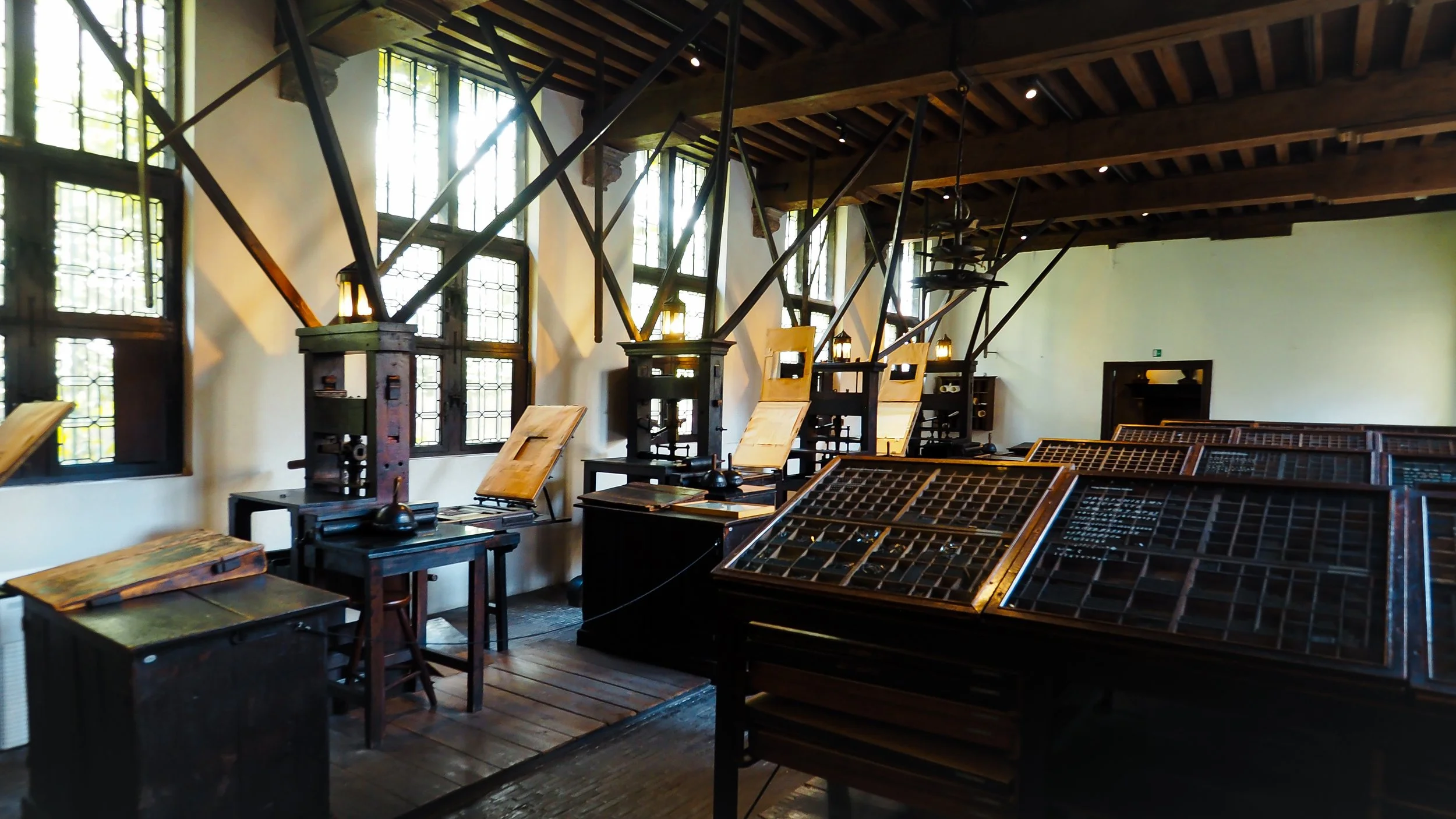
Plantin-Moretus: Composition and press room
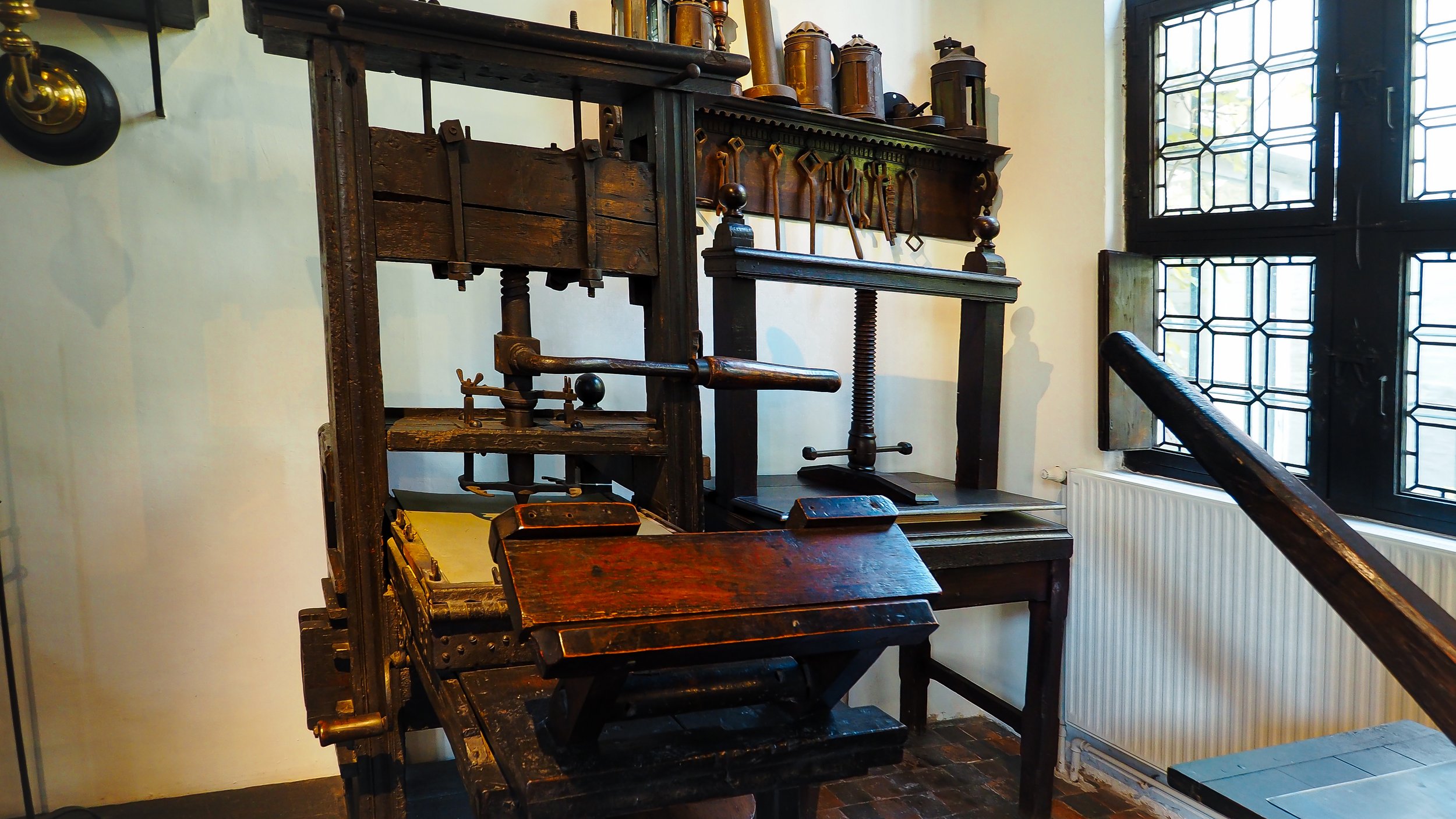
Plantin-Moretus: Original press
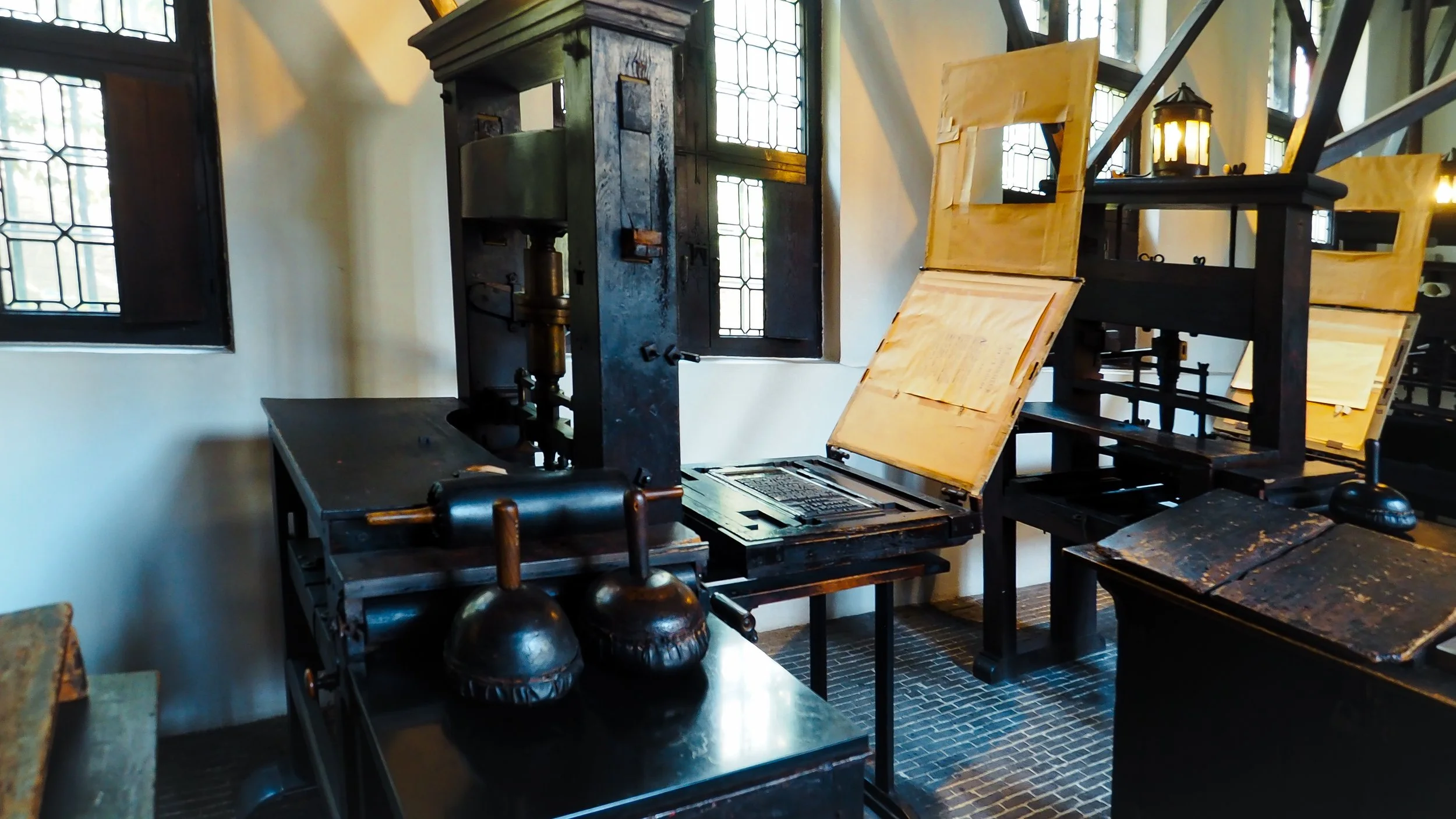
Plantin-Moretus: Original press
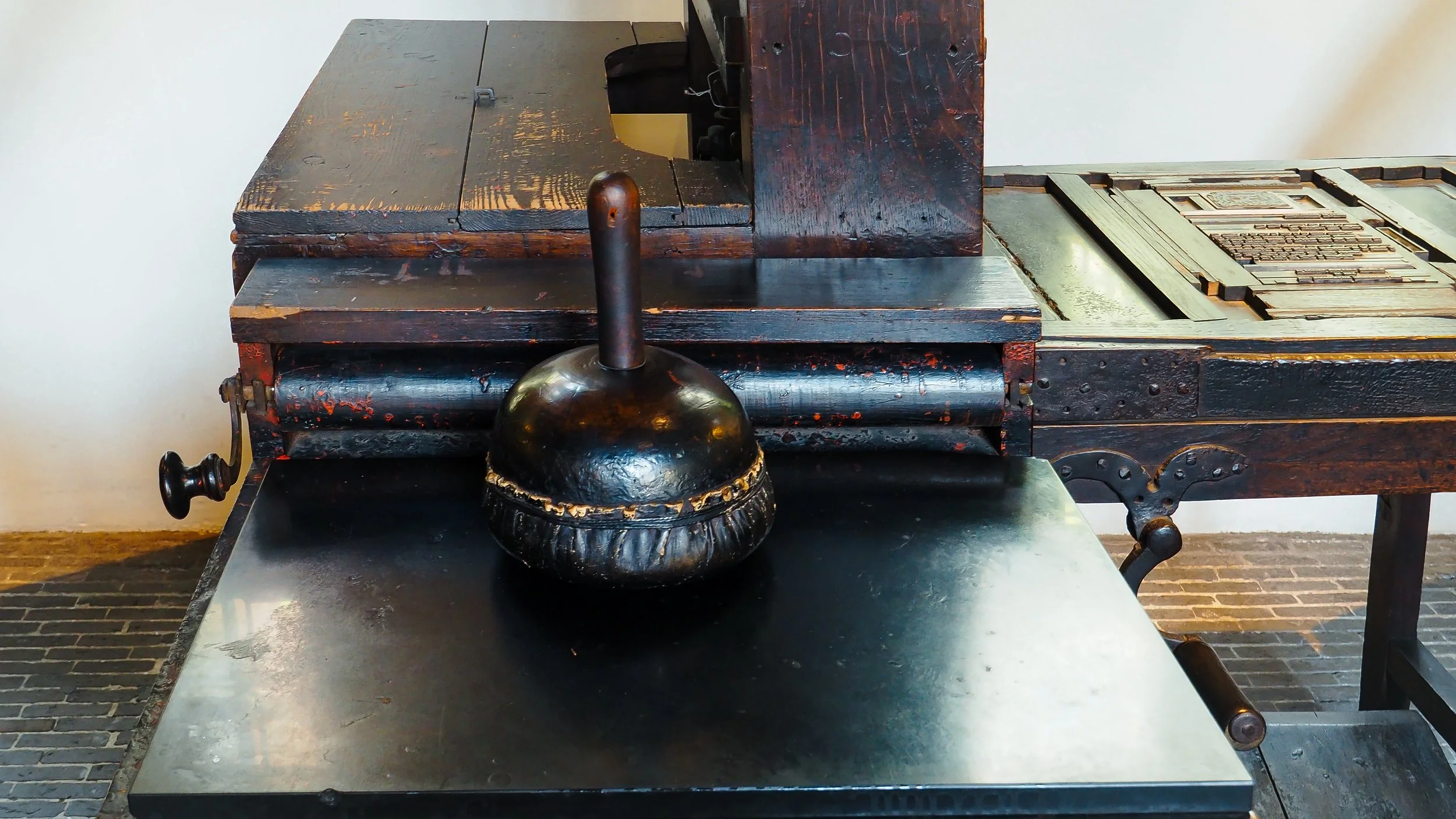
Plantin-Moretus: Inking pads

Plantin-Moretus: Composition and press room
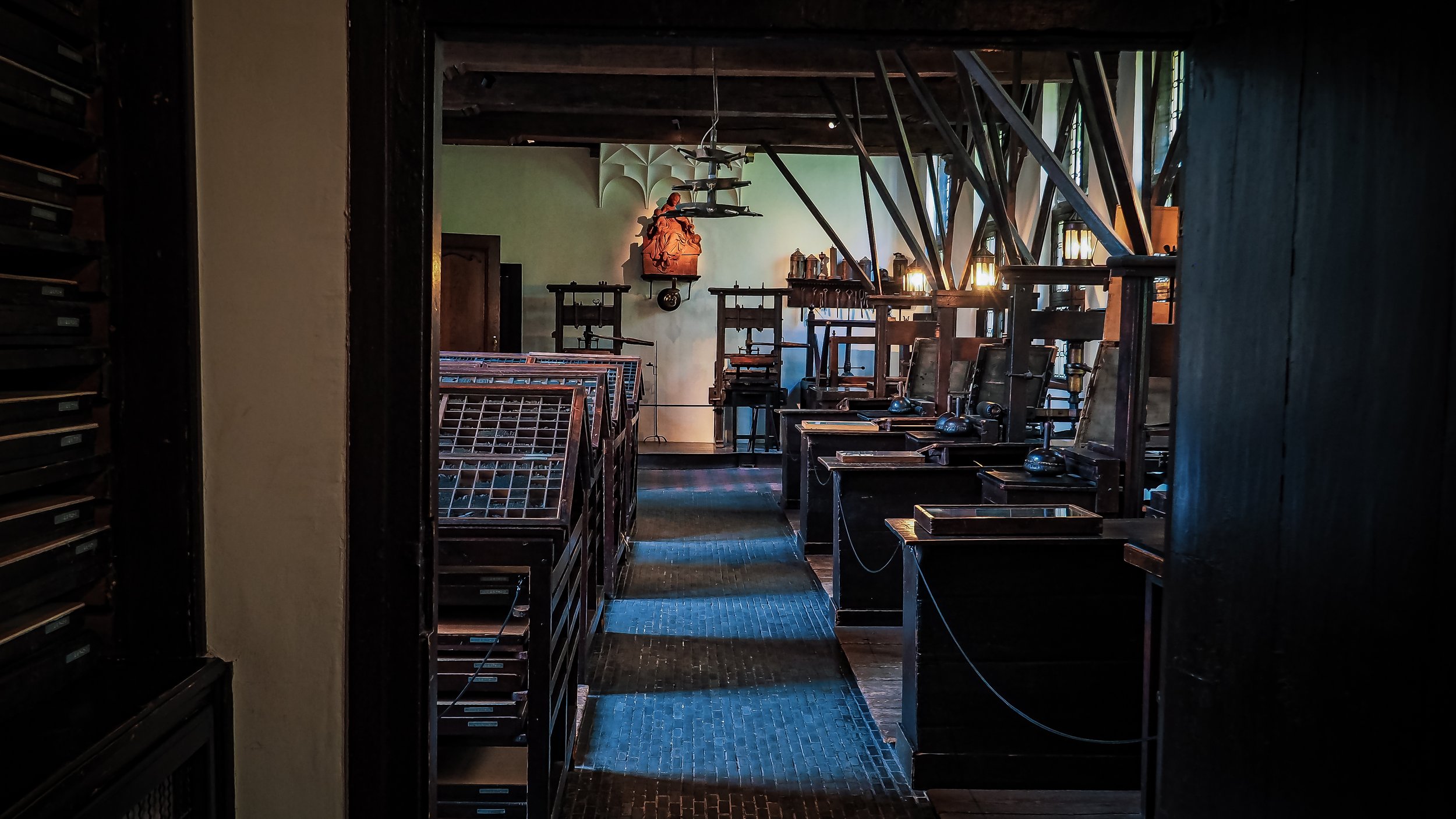
Plantin-Moretus: Composition and press room
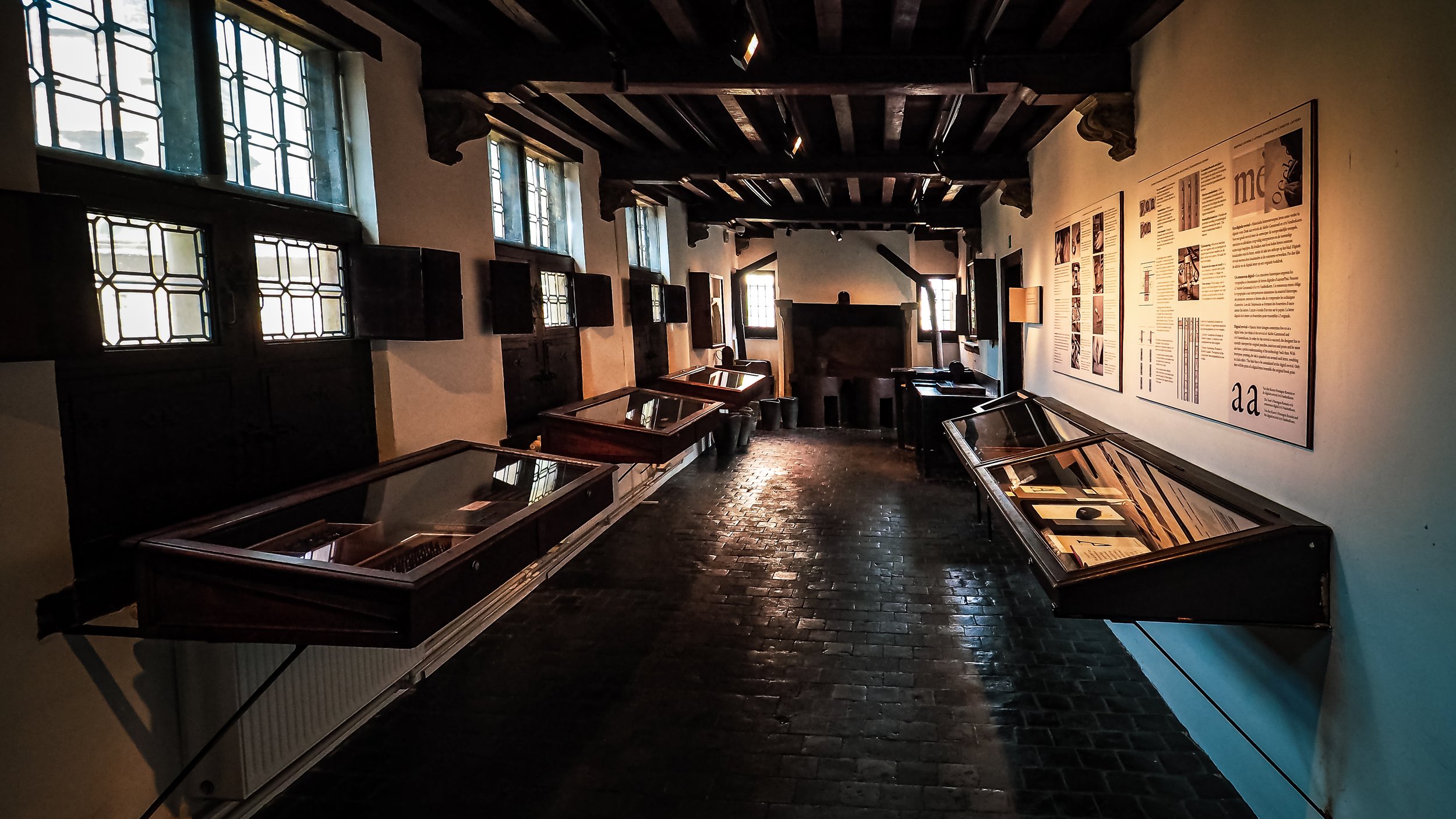
Plantin-Moretus: Foundry
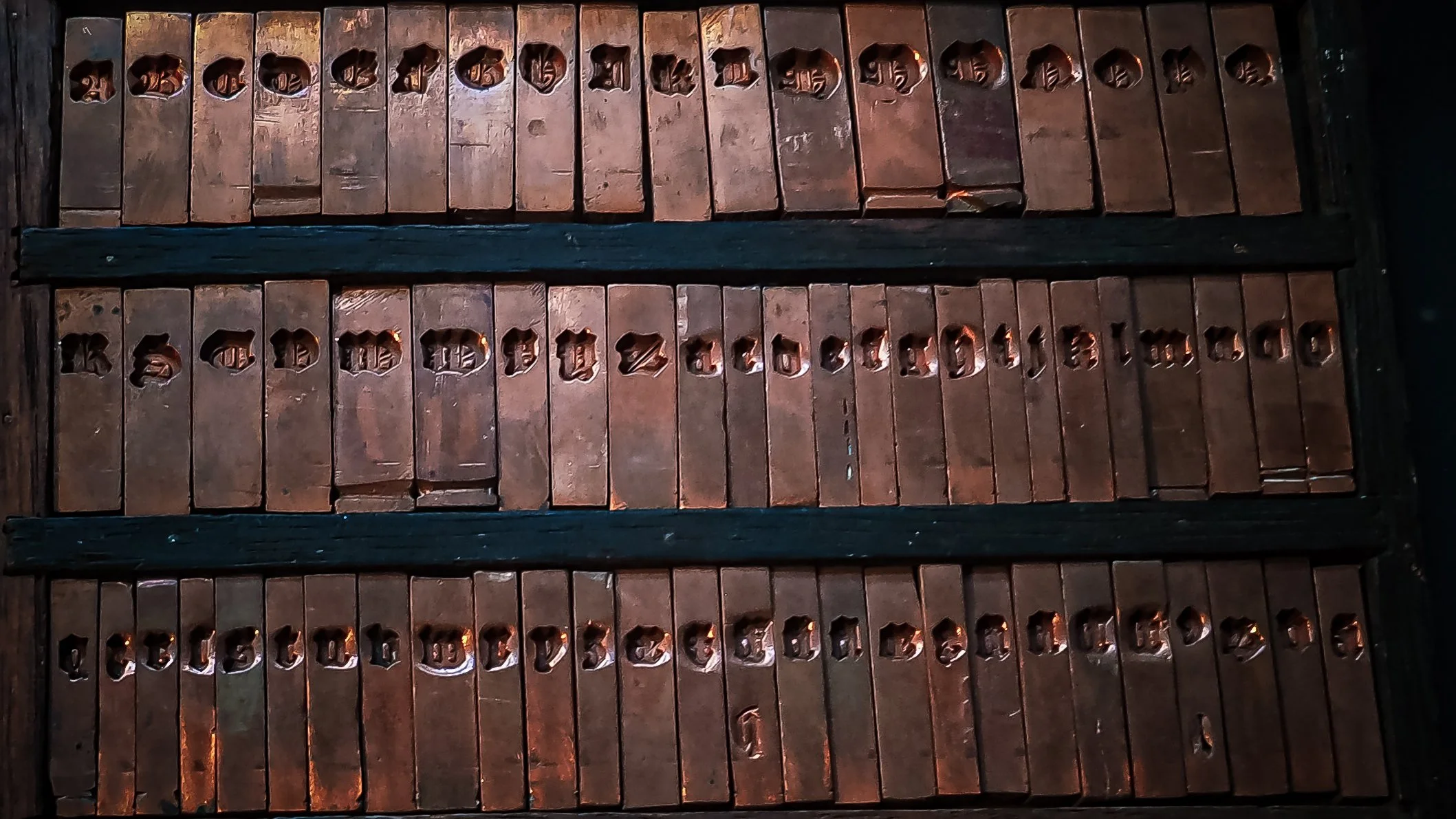
Plantin-Moretus: Copper type moulds
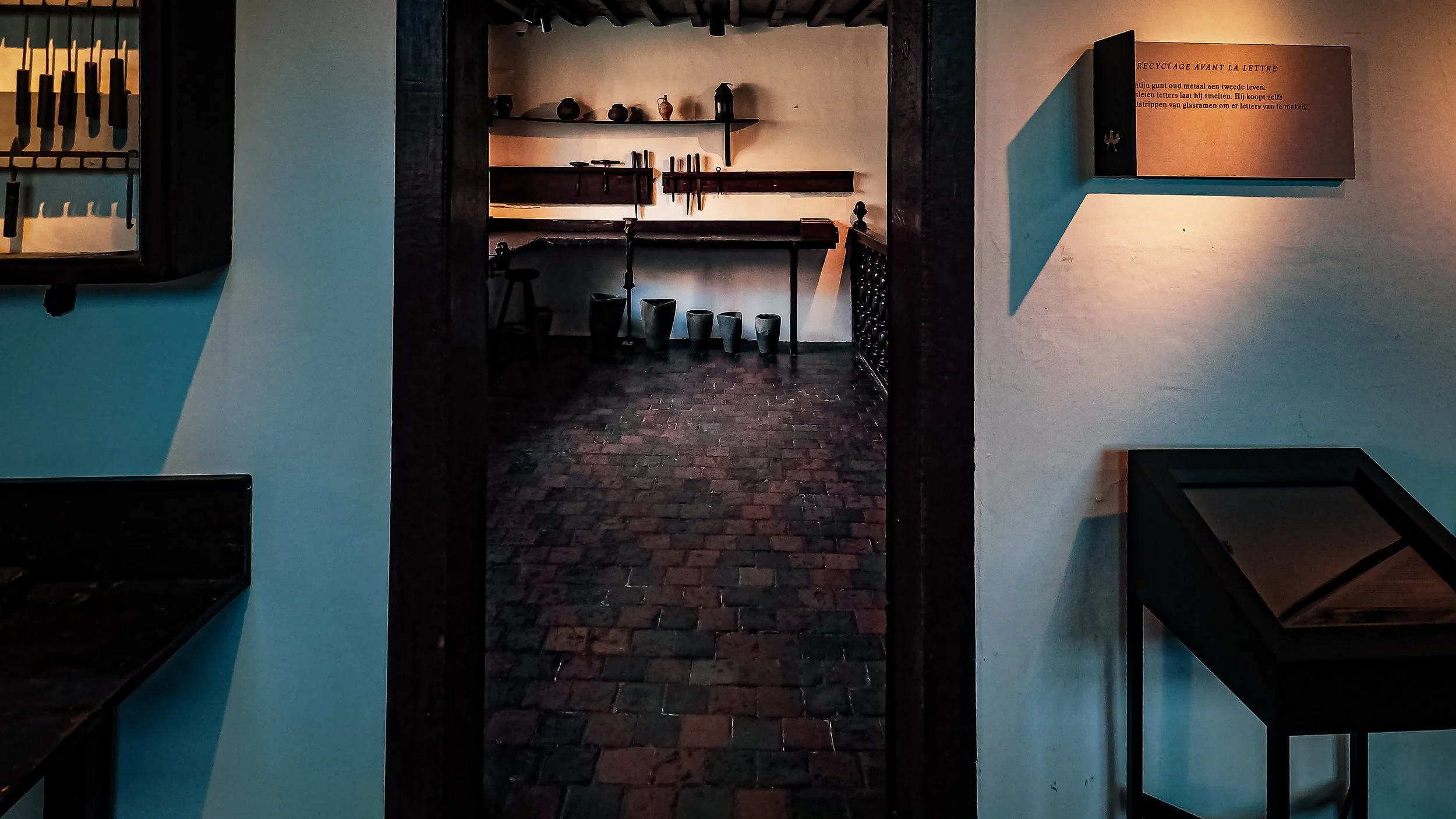
Plantin-Moretus: Foundry
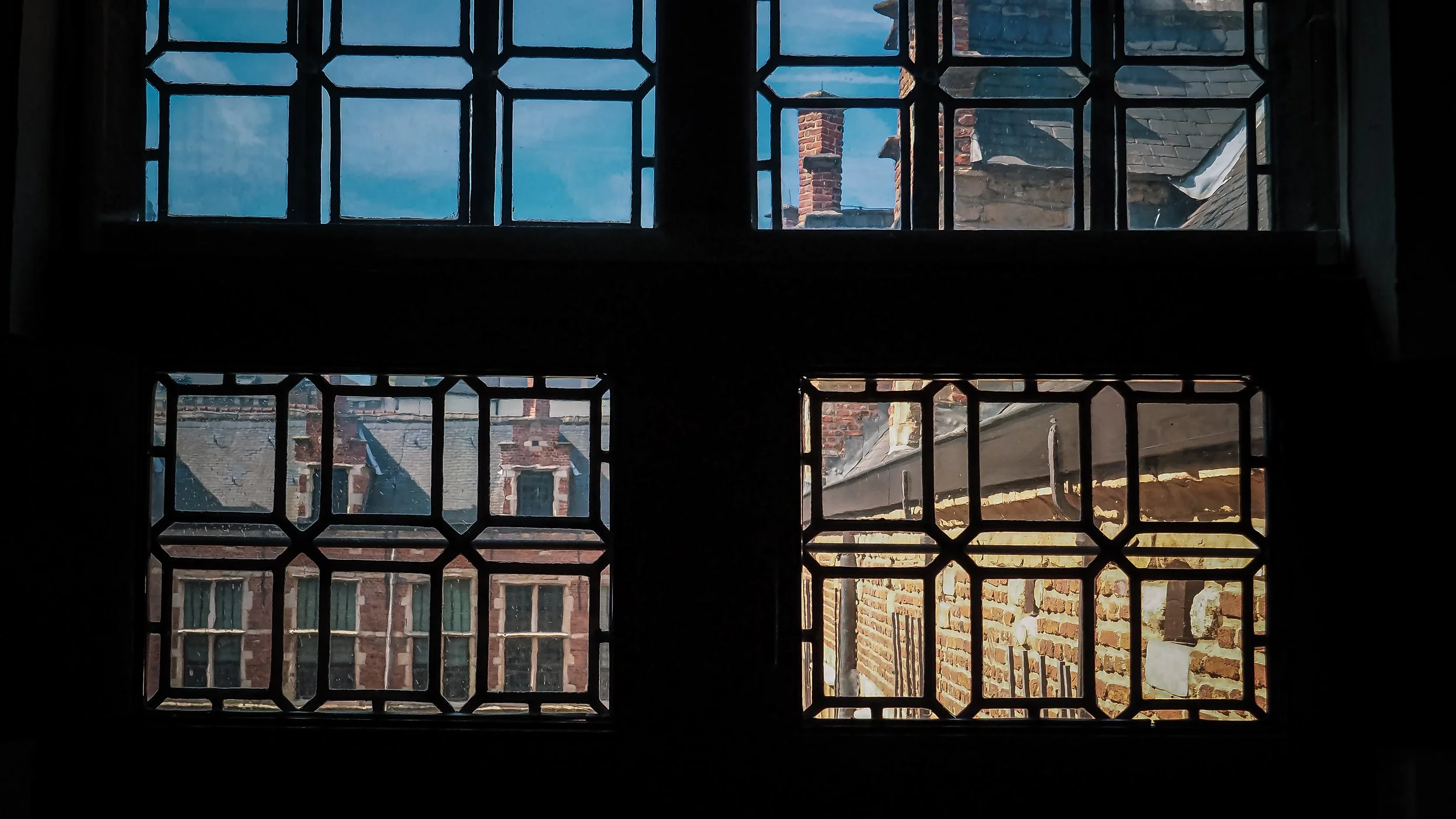
Plantin-Moretus Museum
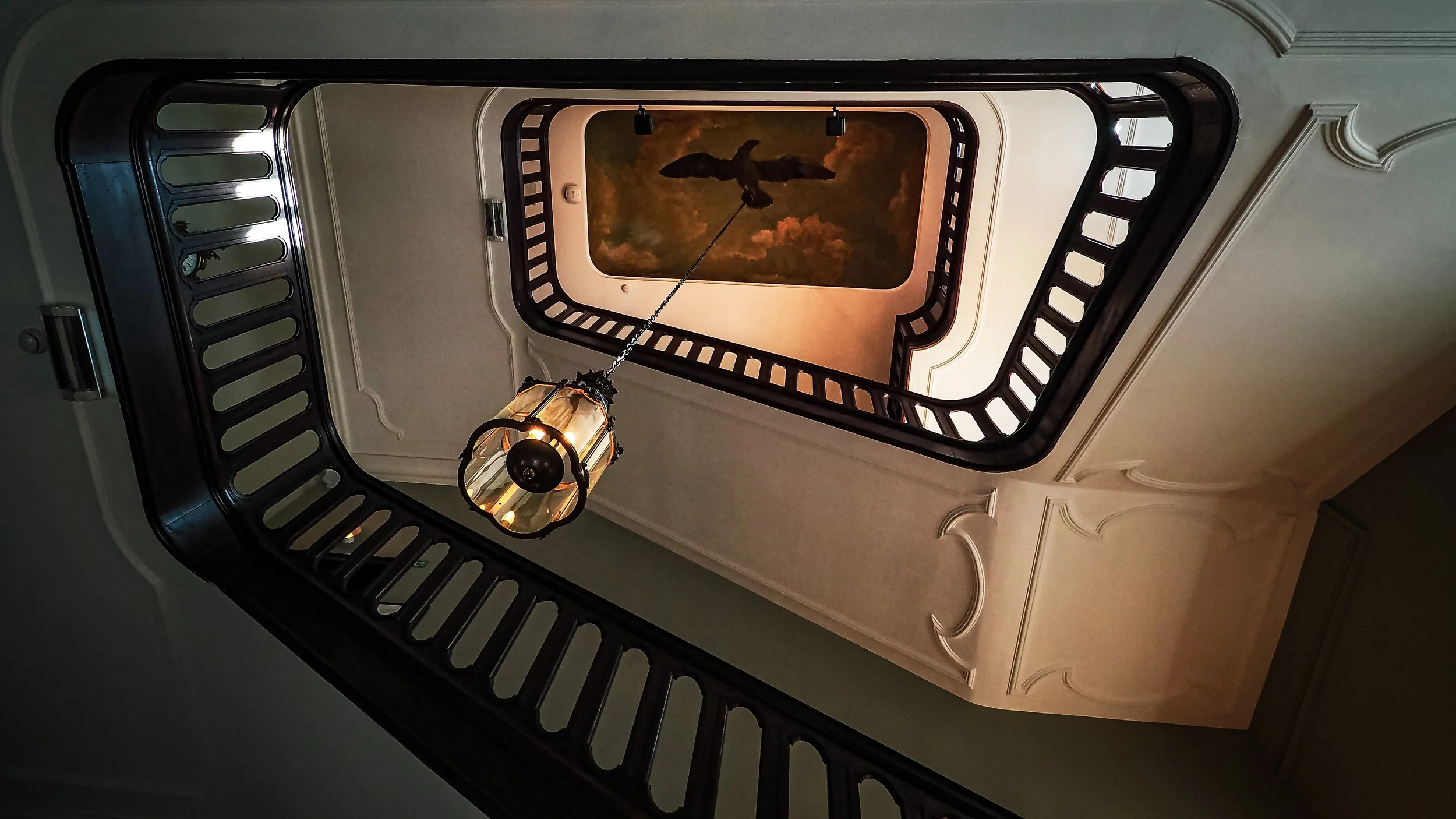
Plantin-Moretus Museum
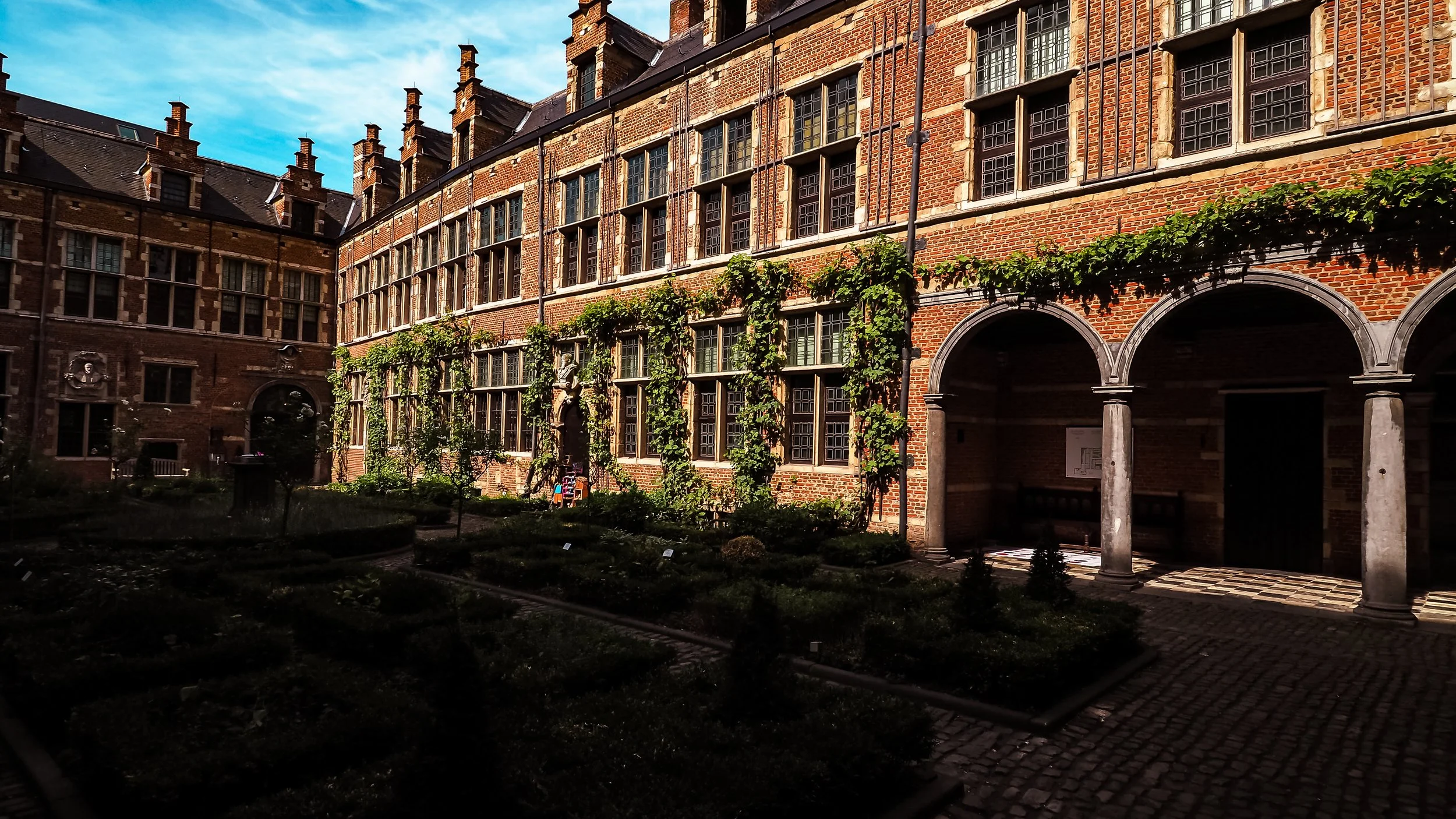
Plantin-Moretus: Courtyard
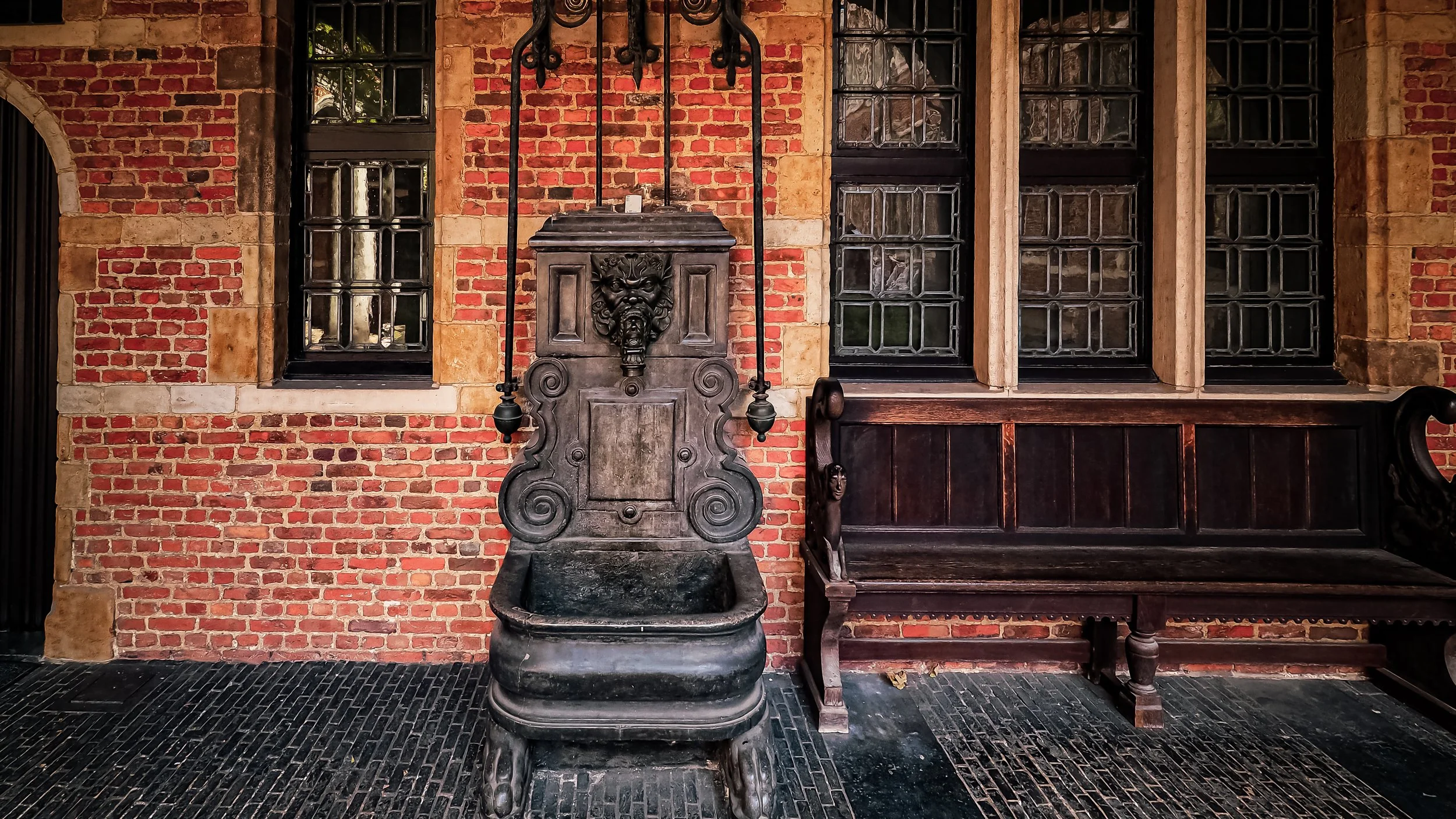
Plantin-Moretus: Courtyard
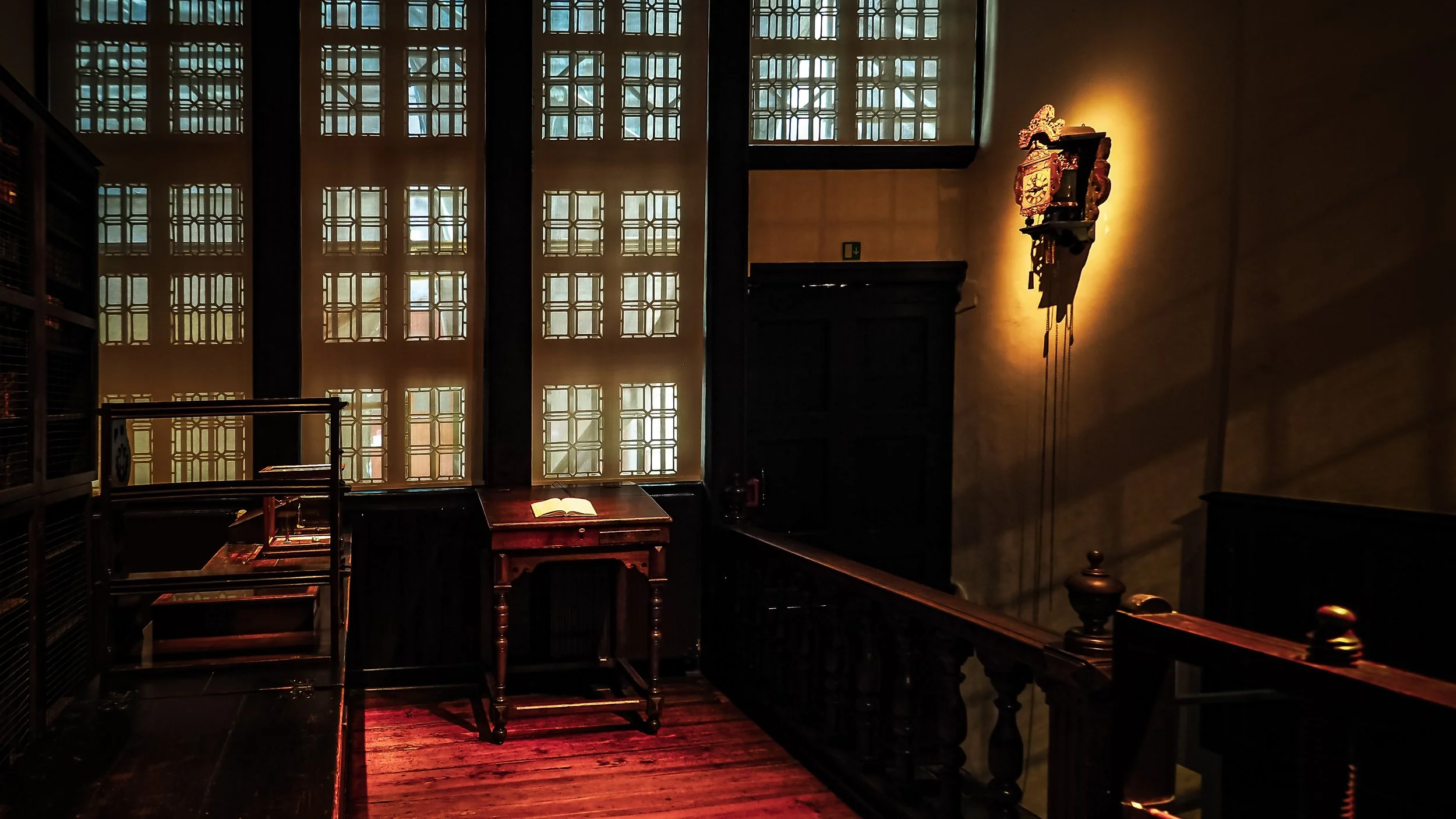
Plantin-Moretus: Proofreading room
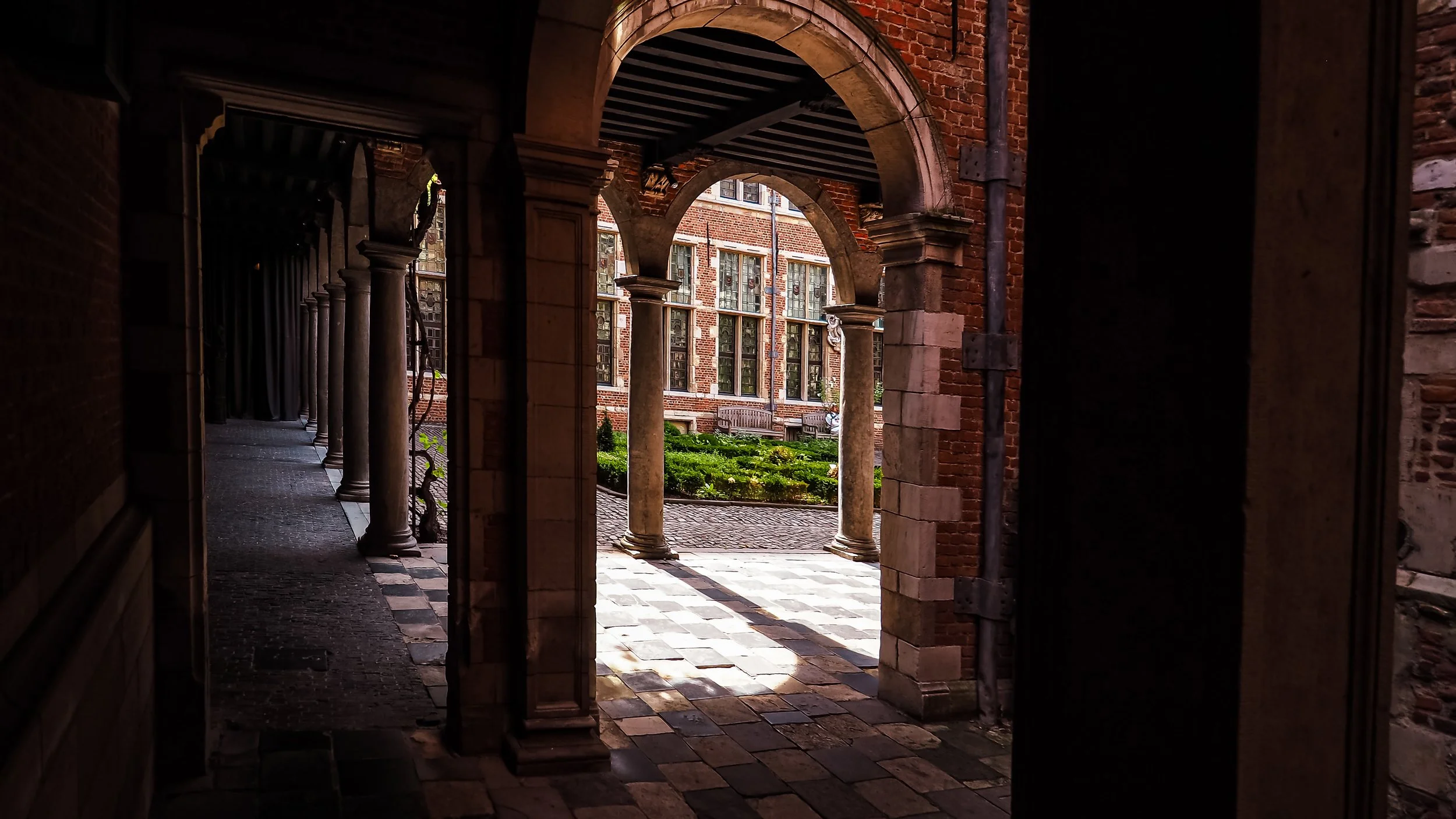
Plantin-Moretus: Courtyard
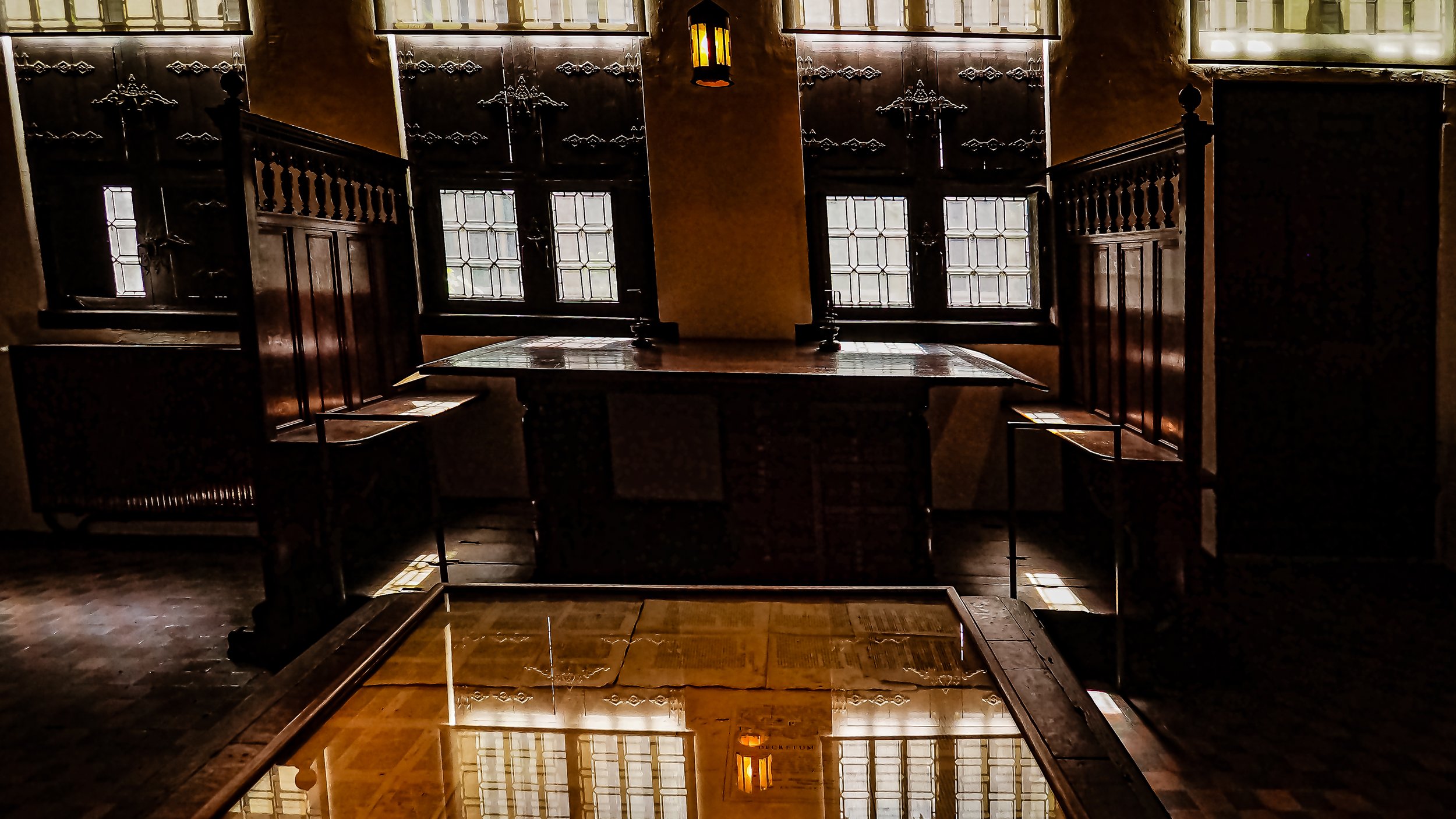
Plantin-Moretus: Proofreading room
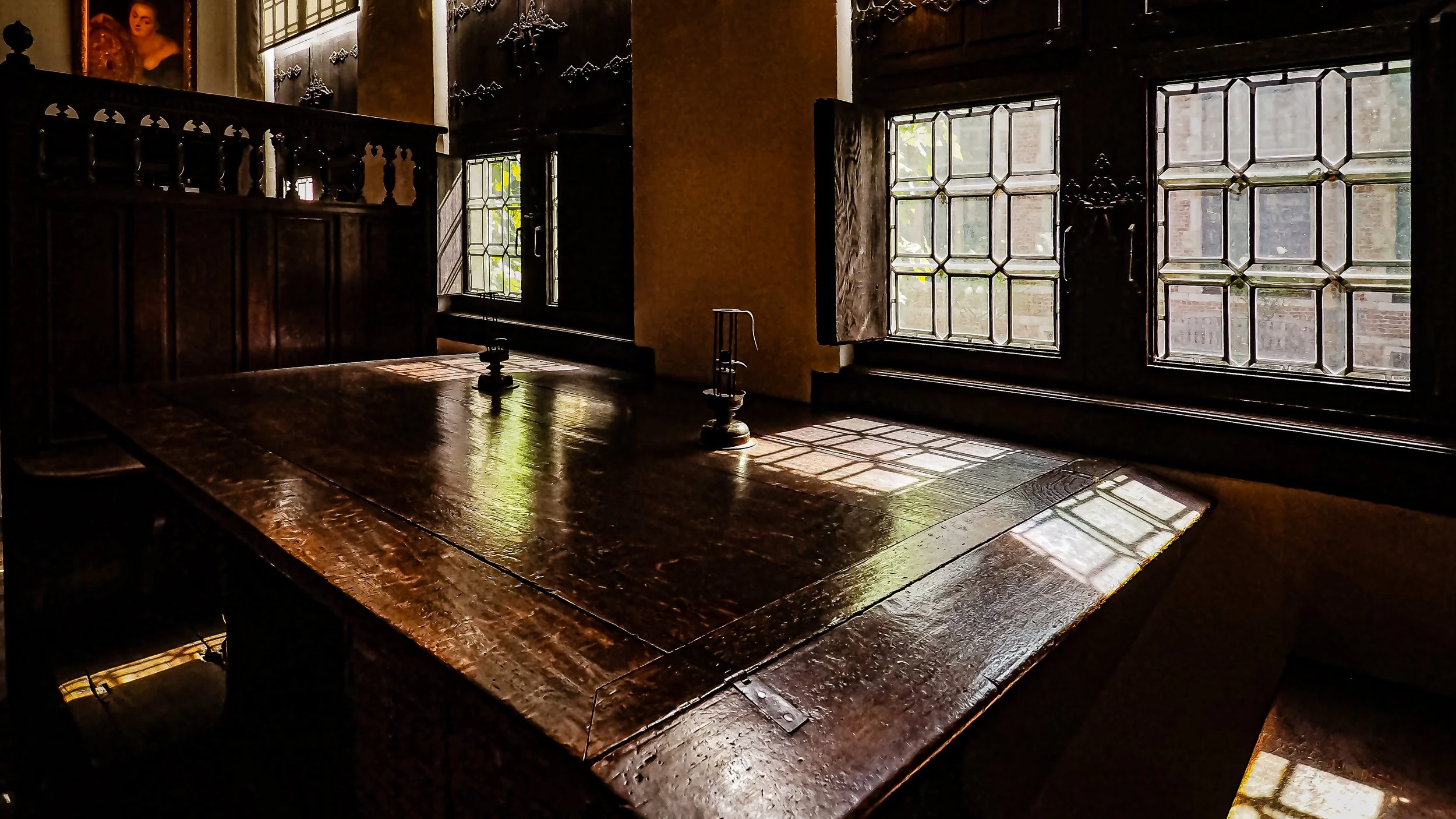
Plantin-Moretus: Proofreading room
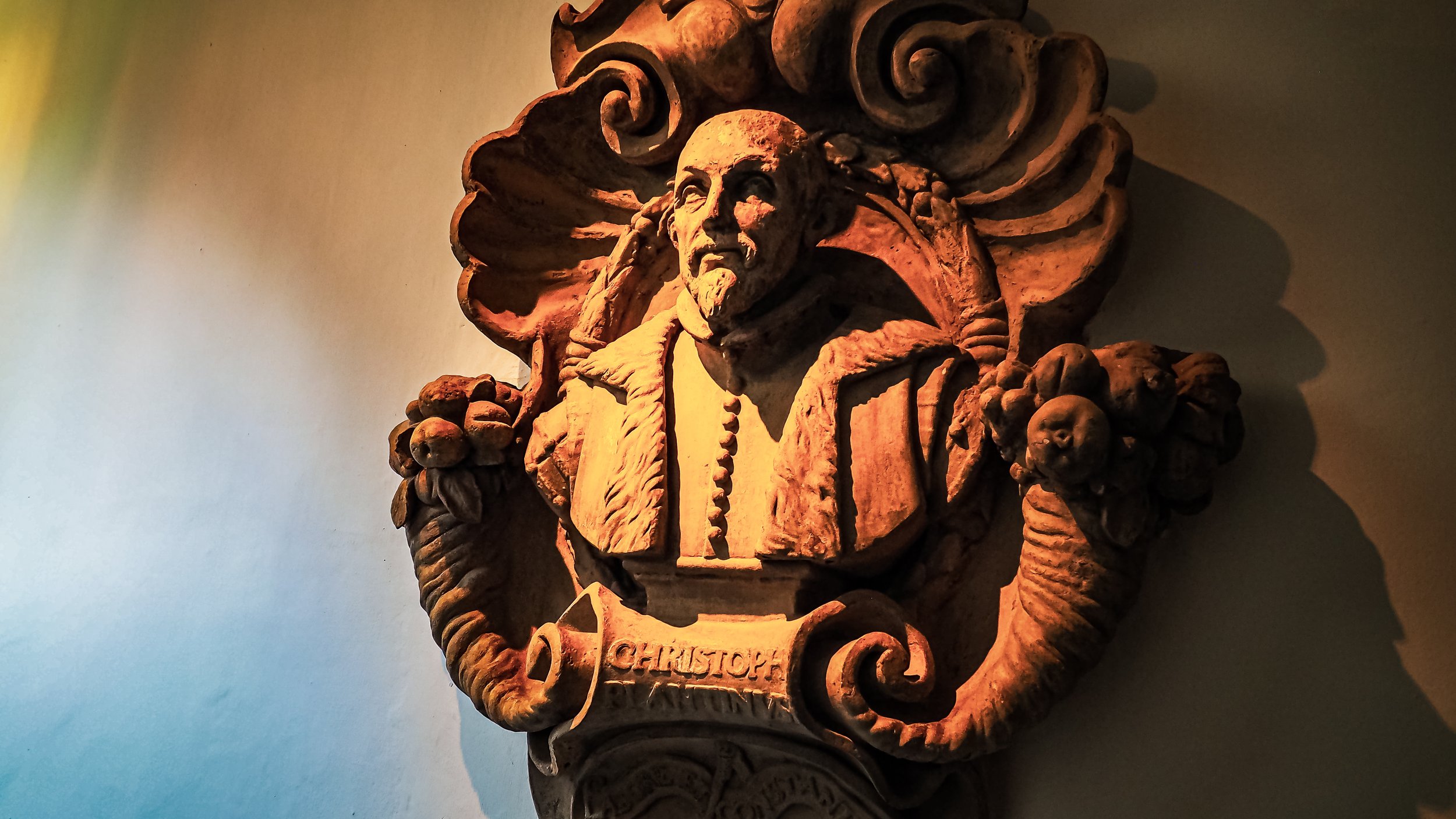
Plantin-Moretus Museum

Plantin-Moretus: Composition cases
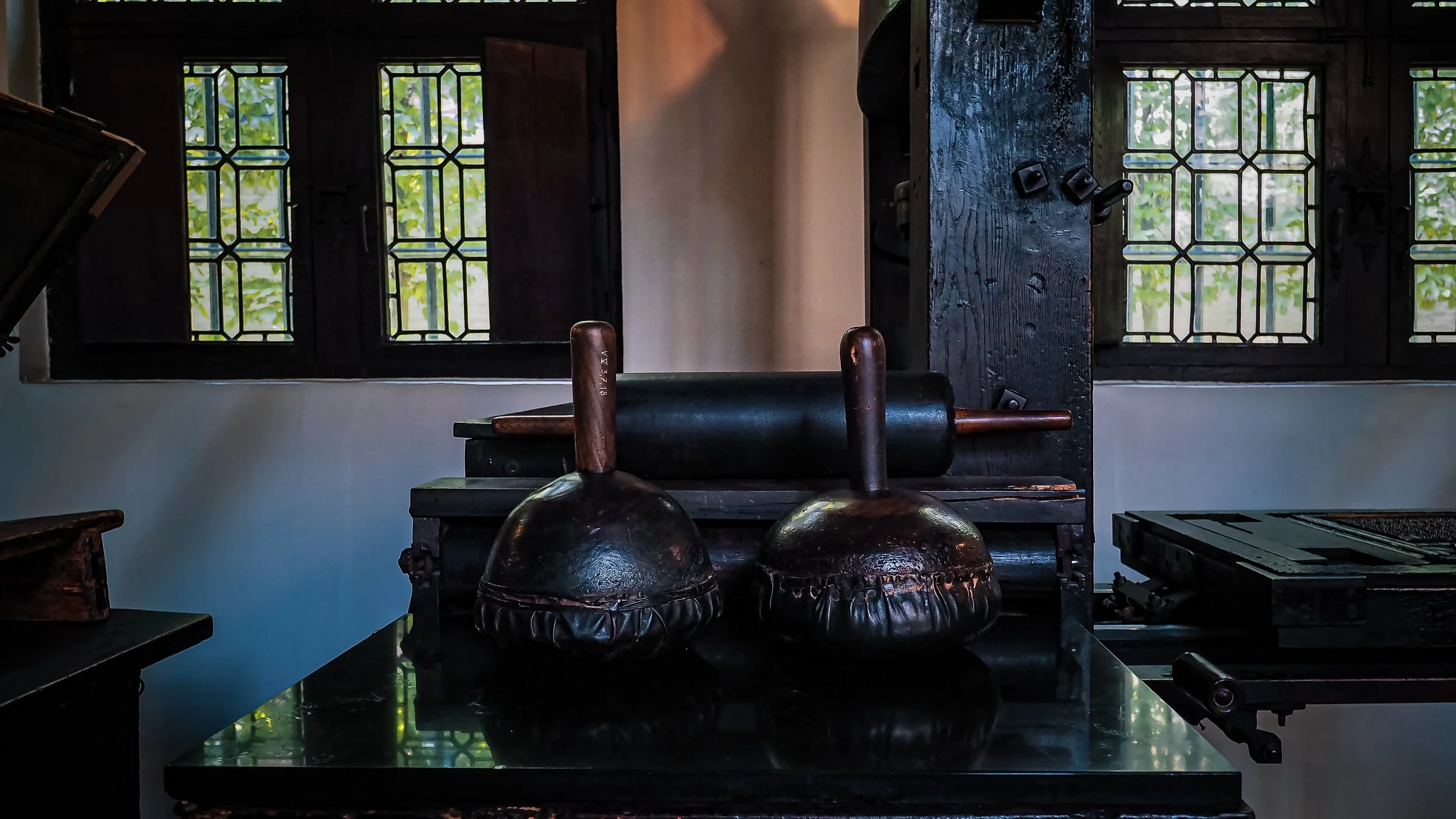
Plantin-Moretus: Inking pads
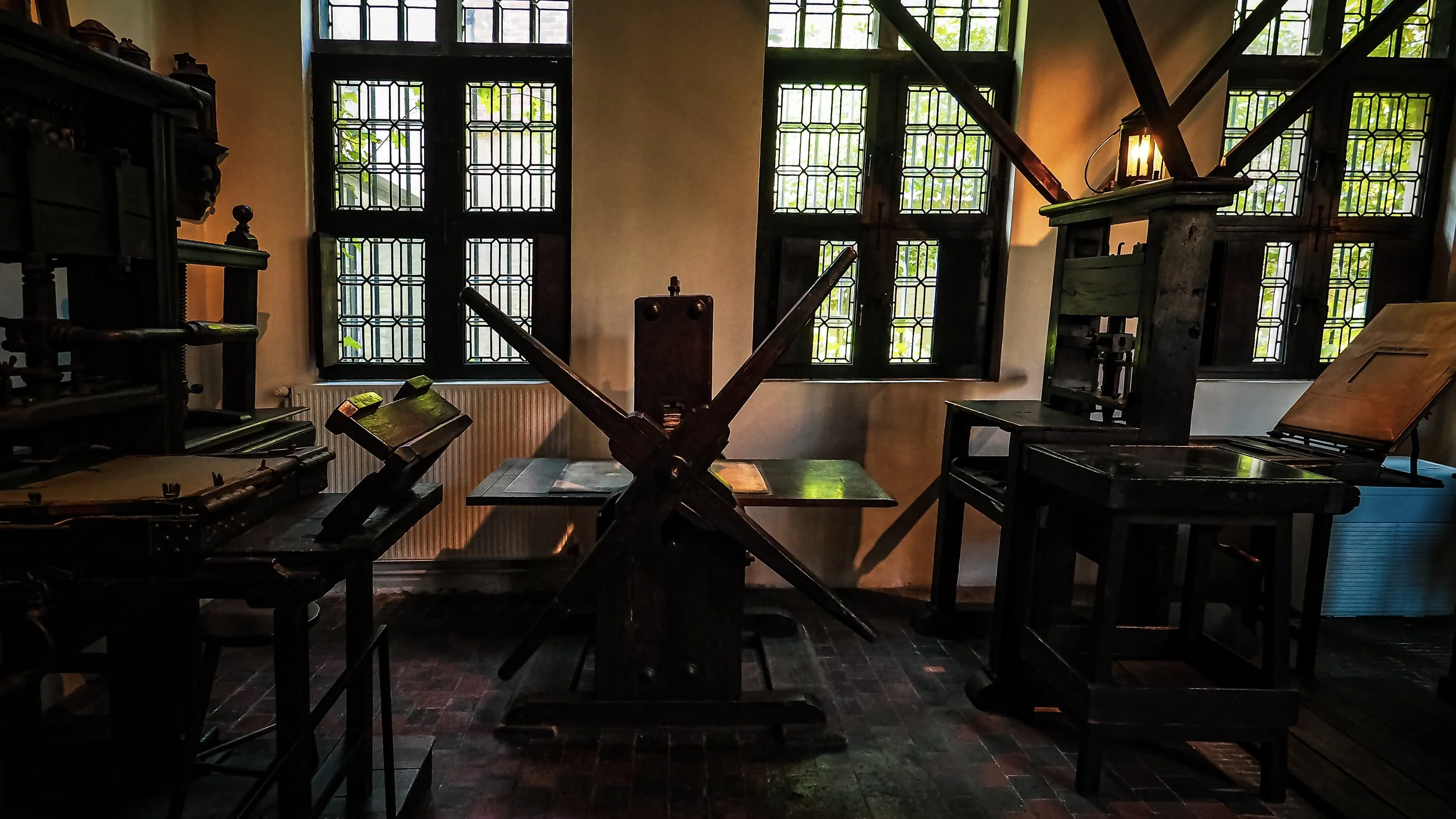
Plantin-Moretus: Composition and press room
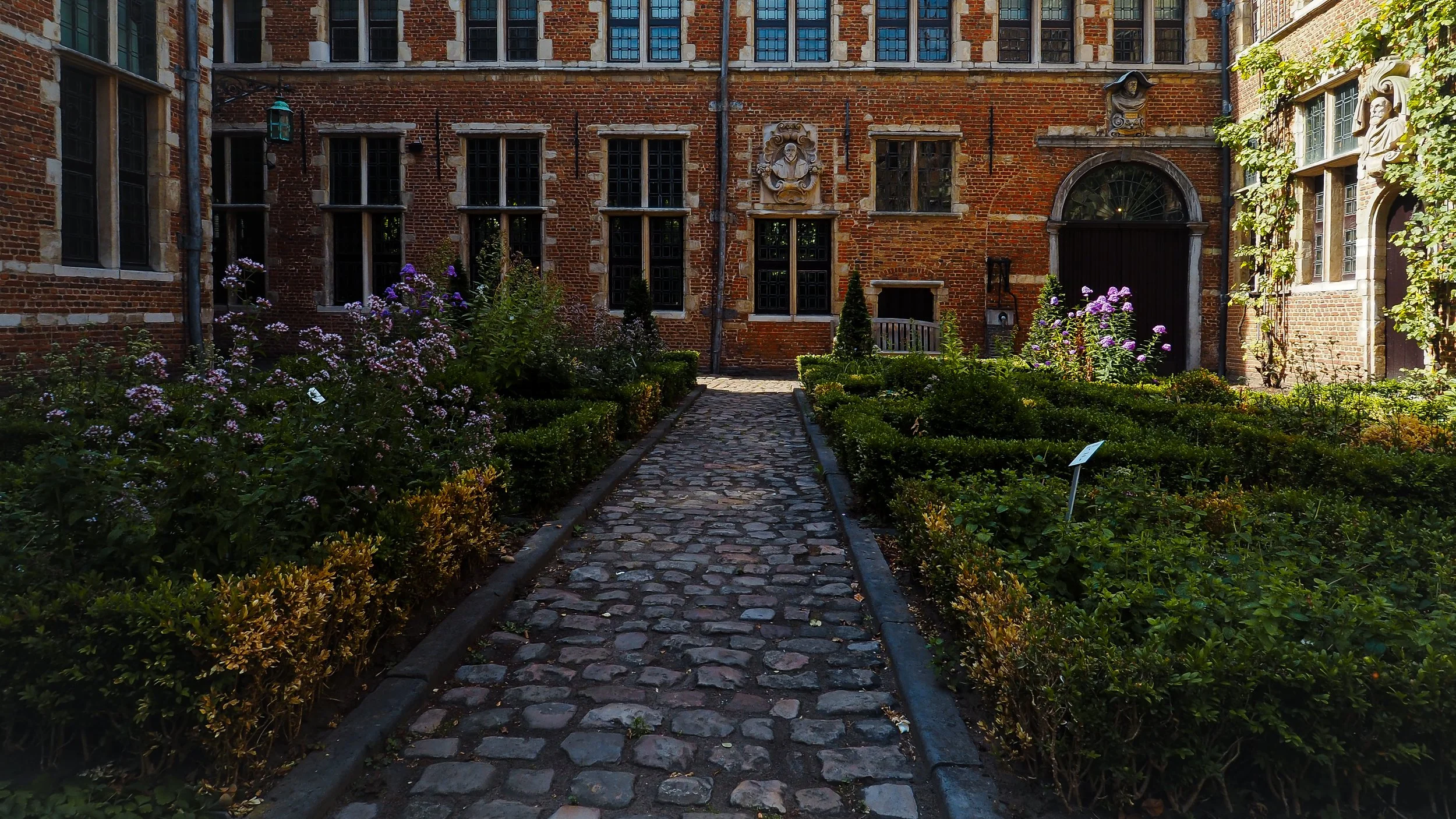
Plantin-Moretus: Courtyard
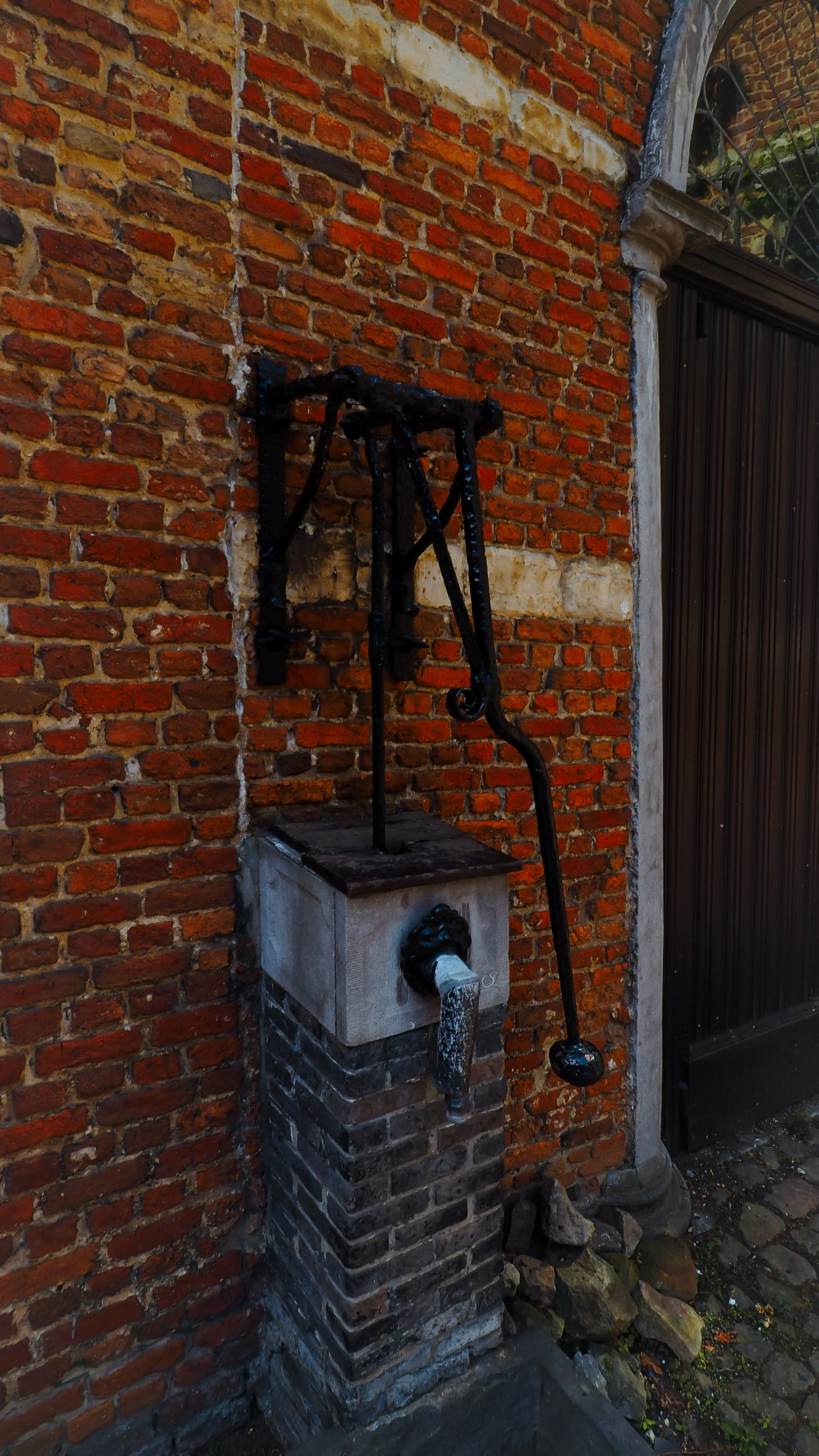
Plantin-Moretus: Courtyard
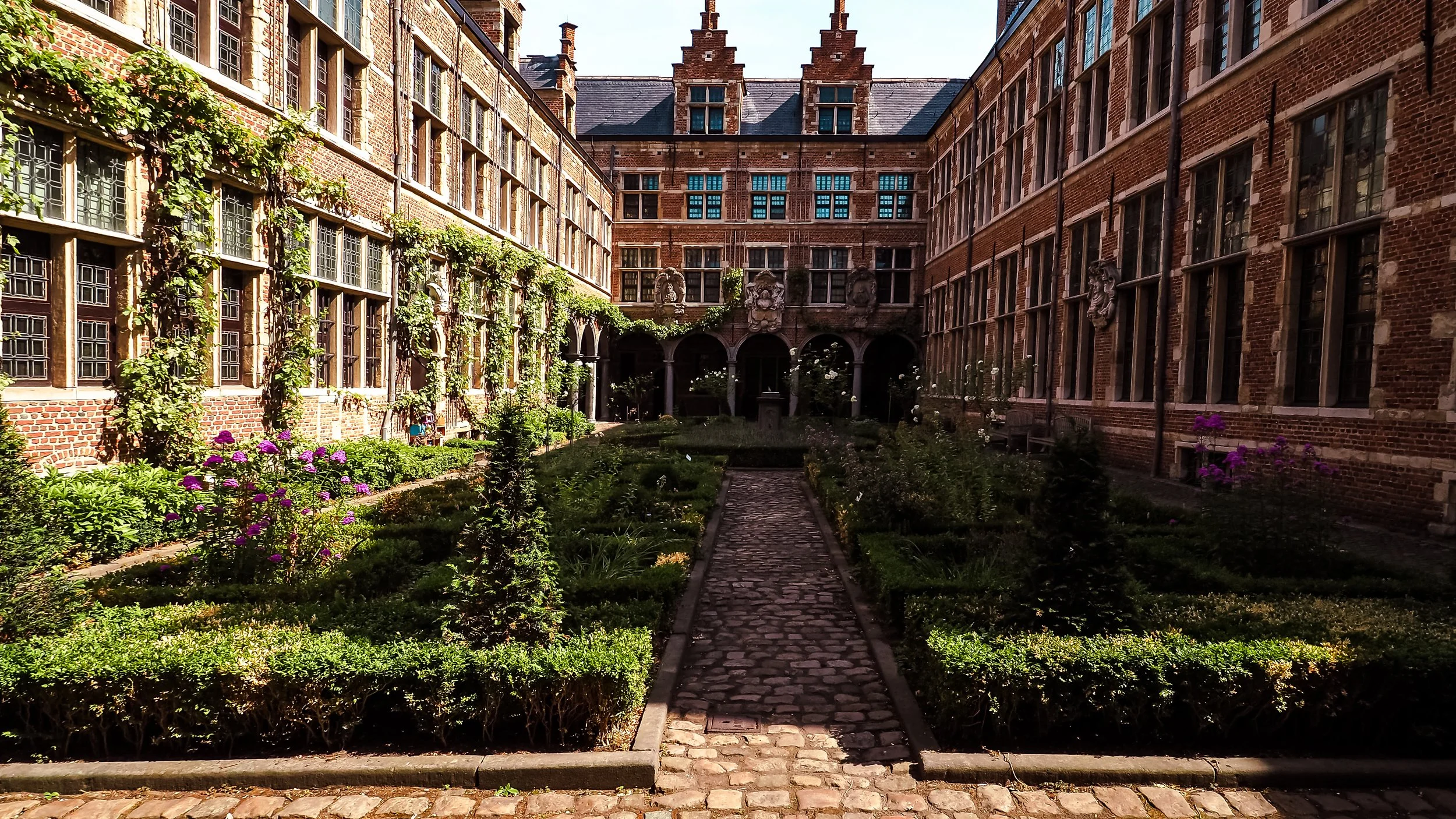
Plantin-Moretus: Courtyard
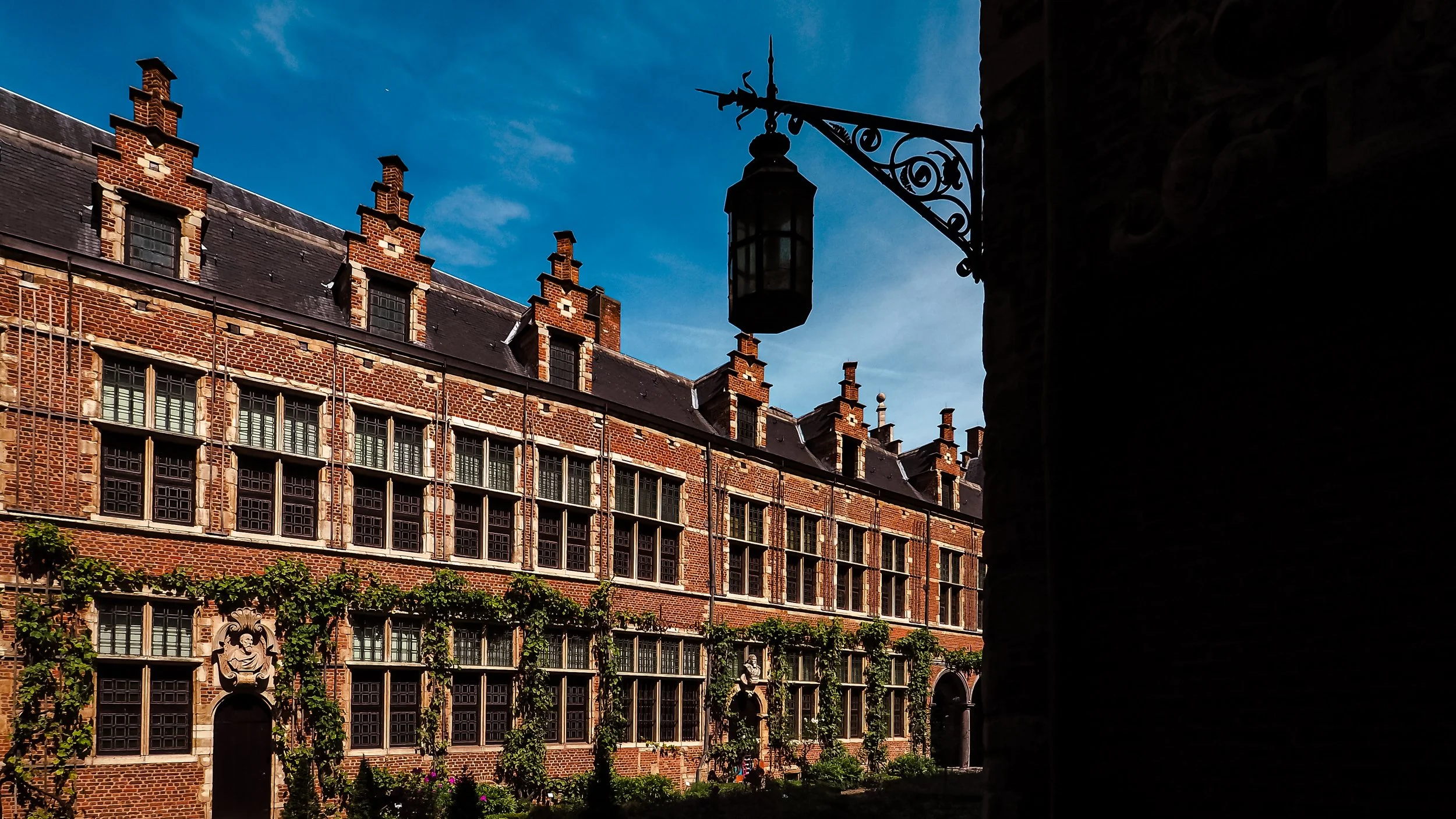
Plantin-Moretus: Courtyard
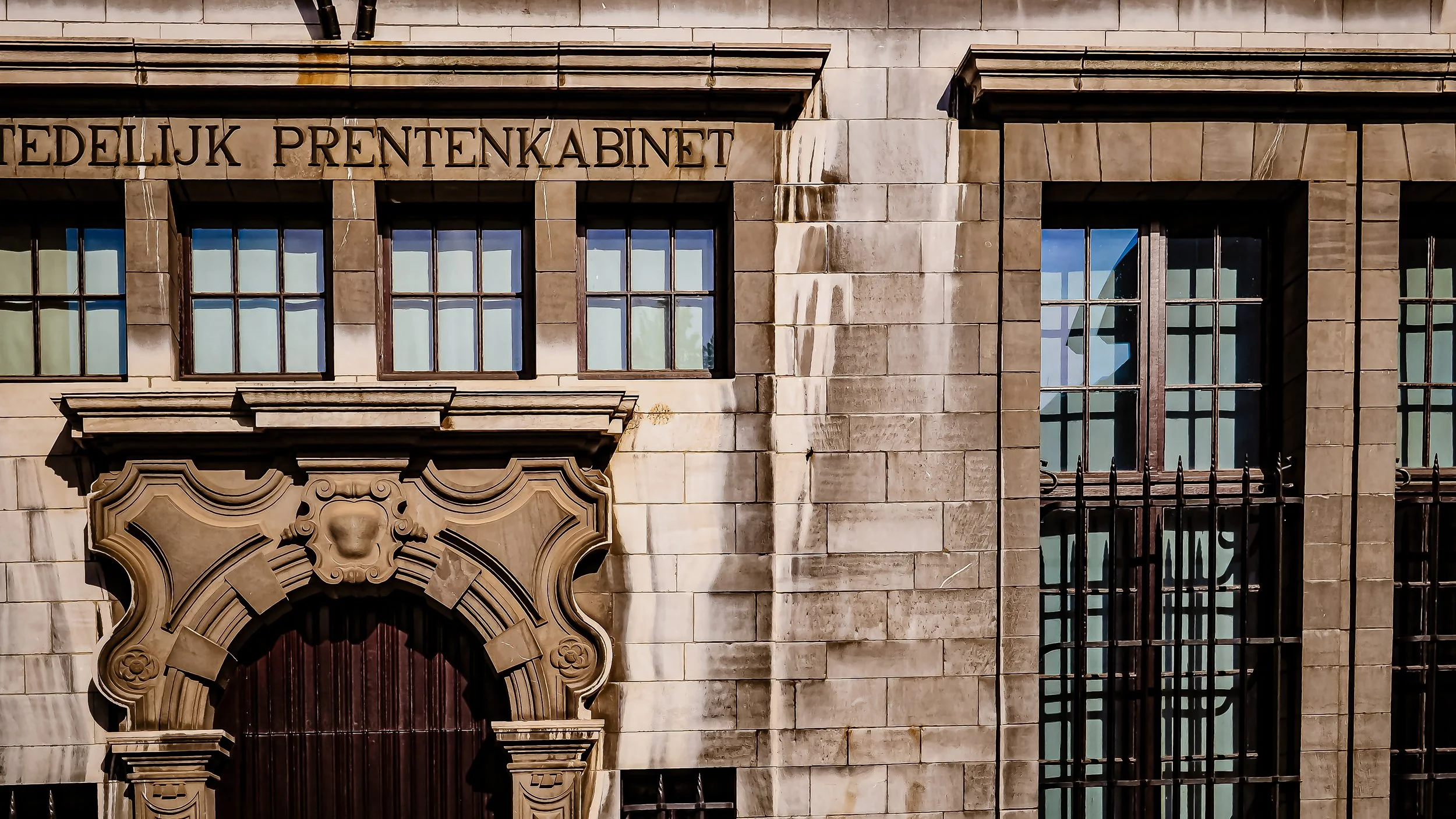
Plantin-Moretus Museum
The Plantin-Moretus Museum, Antwerp,
Belgium
The Plantin-Moretus Museum, located in Antwerp, Belgium, is a unique museum dedicated to the history of printing and publishing. The museum is housed in the former residence and printing workshop of Christophe Plantin, a prominent printer and publisher from the 16th century. The building complex, including the house and the workshop, has been exceptionally well-preserved and provides a glimpse into the life and work of Plantin and his successors.
Christophe Plantin established one of the most important printing presses in Europe during the Renaissance. His printing house was renowned for producing beautifully crafted books, including scientific works, classical texts, and religious publications. The museum preserves a vast collection of early printed books, manuscripts, and printing equipment. The building itself is a UNESCO World Heritage site, recognized for its historical significance and architectural integrity. Visitors to the museum can explore the elegant living quarters of the Plantin-Moretus family, as well as the workshop where printing presses and typecasting equipment are displayed.
The museum houses a rich collection of printing artifacts, including Gutenberg Bibles, manuscripts, early printed books, and unique examples of printing techniques from the 16th to the 18th centuries. It offers insights into the evolution of printing technology and its cultural impact during the Renaissance and beyond.
The Plantin-Moretus Museum provides guided tours that offer a comprehensive look at the history of printing, the life of Christophe Plantin, and the cultural milieu of Antwerp during the Renaissance. Visitors can see original printing presses in action and learn about the painstaking process of book production in the early modern period.
Overall, the Plantin-Moretus Museum is a treasure trove for anyone interested in the history of printing, book culture, and the Renaissance era in Europe. It offers a unique opportunity to step back in time and appreciate the craftsmanship and innovation that defined the early days of the printing revolution.